
Nepal’s Gandaki Province Approves Bill to Regulate Marijuana Cultivation for Medicinal and Industrial Use
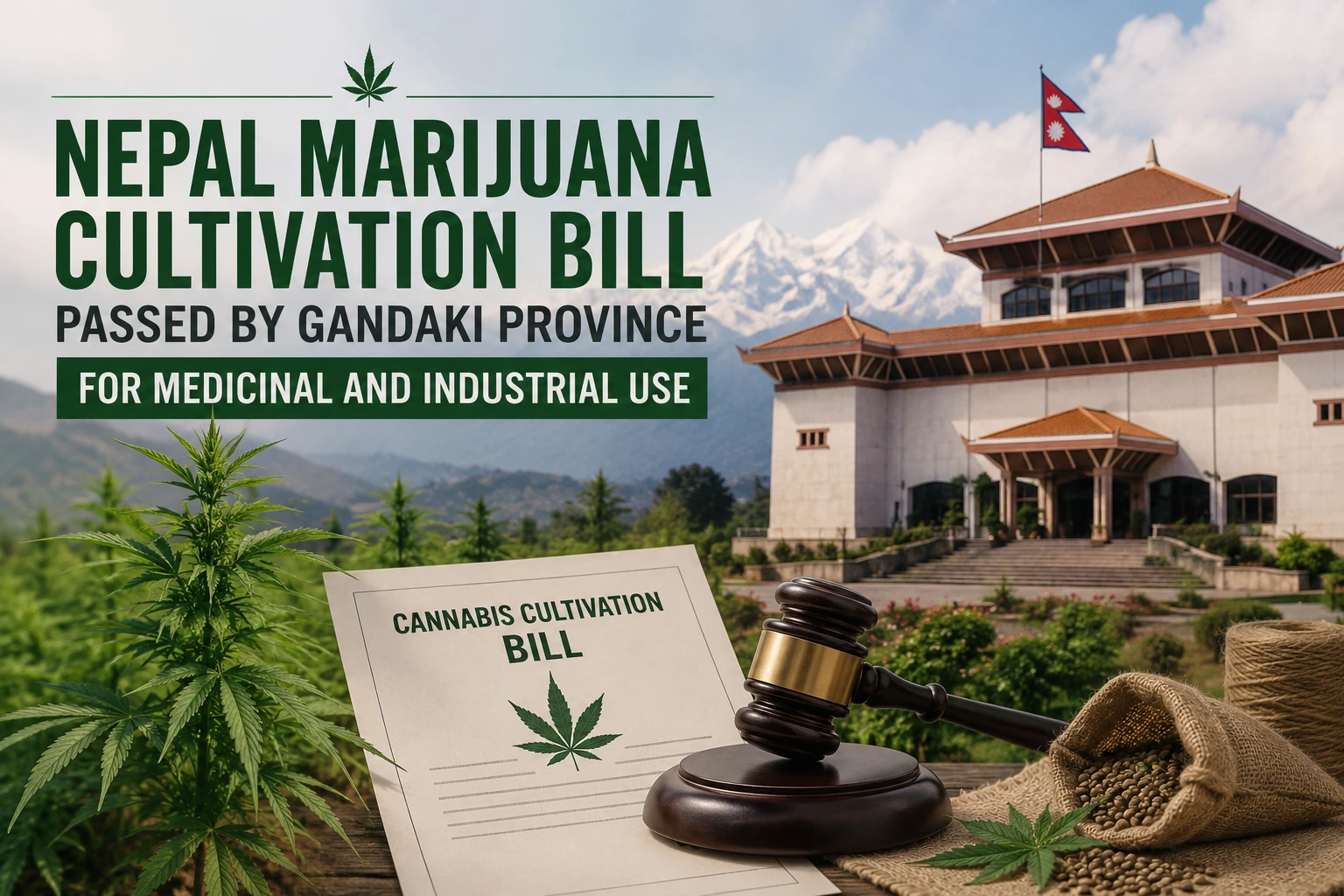
Nepal’s Gandaki Province Assembly has unanimously approved a Bill allowing the regulated cultivation of marijuana for medicinal and industrial purposes, marking a significant step toward legal cannabis production in the province.
The Bill, titled the “Bill related to management of regulation of marijuana farming for medicinal and industrial purposes,” was presented by Gandaki Province Minister of Industry and Tourism Yasodha Rimal. Before being placed before the Assembly, the Bill was reviewed, discussed and amended by the Provincial Assembly’s Finance and Development Committee.
Announcing the passage of the Bill, Gandaki Province Assembly Speaker Krishna Prasad Dhital stated that the proposed amendments had been approved without opposition. With this endorsement, marijuana cultivation for medicinal and industrial production will now be permitted in Gandaki Province under a controlled and regulated framework.
However, the new law does not allow unrestricted cultivation. Farming will only be permitted in areas officially designated by the provincial government. Individuals and organisations seeking to grow marijuana will need prior approval and will be required to operate under strict government supervision.
Speaking in the Assembly, Minister Rimal said Gandaki Province has favourable geography and climate for marijuana cultivation. She noted that the crop can adapt well to changing climate conditions, requires comparatively less water, and can be grown with limited human effort while offering higher yields.
Rimal also said the crop could help utilise barren land across the province. According to her, marijuana cultivation can be suitable for all 11 districts of Gandaki Province, as it does not require pesticides and can be produced organically. She further highlighted that the crop is less vulnerable to damage from monkeys, which have been a recurring problem for farmers in the region.
Under the new legal framework, the tetrahydrocannabinol, or THC, content in cultivated marijuana must remain below three percent. The Bill also requires mandatory chemical testing of cannabis products before they are sold or used. For this purpose, the provincial government may establish its own laboratory or work with relevant institutions for testing and certification.
The legislation also includes provisions related to preventing marijuana abuse, along with treatment and rehabilitation services. The Finance and Development Committee said it held detailed consultations with experts, local government representatives and concerned stakeholders before finalising the Bill.
Nepal banned the personal consumption and sale of marijuana in 1976. Under existing national law, cannabis-related offences can carry prison sentences ranging from one month to 10 years, depending on the quantity involved.
Although Nepal’s Ministry of Home Affairs has been working on standard operating procedures to regulate limited consumption under specific conditions, a formal national framework has not yet been implemented.


